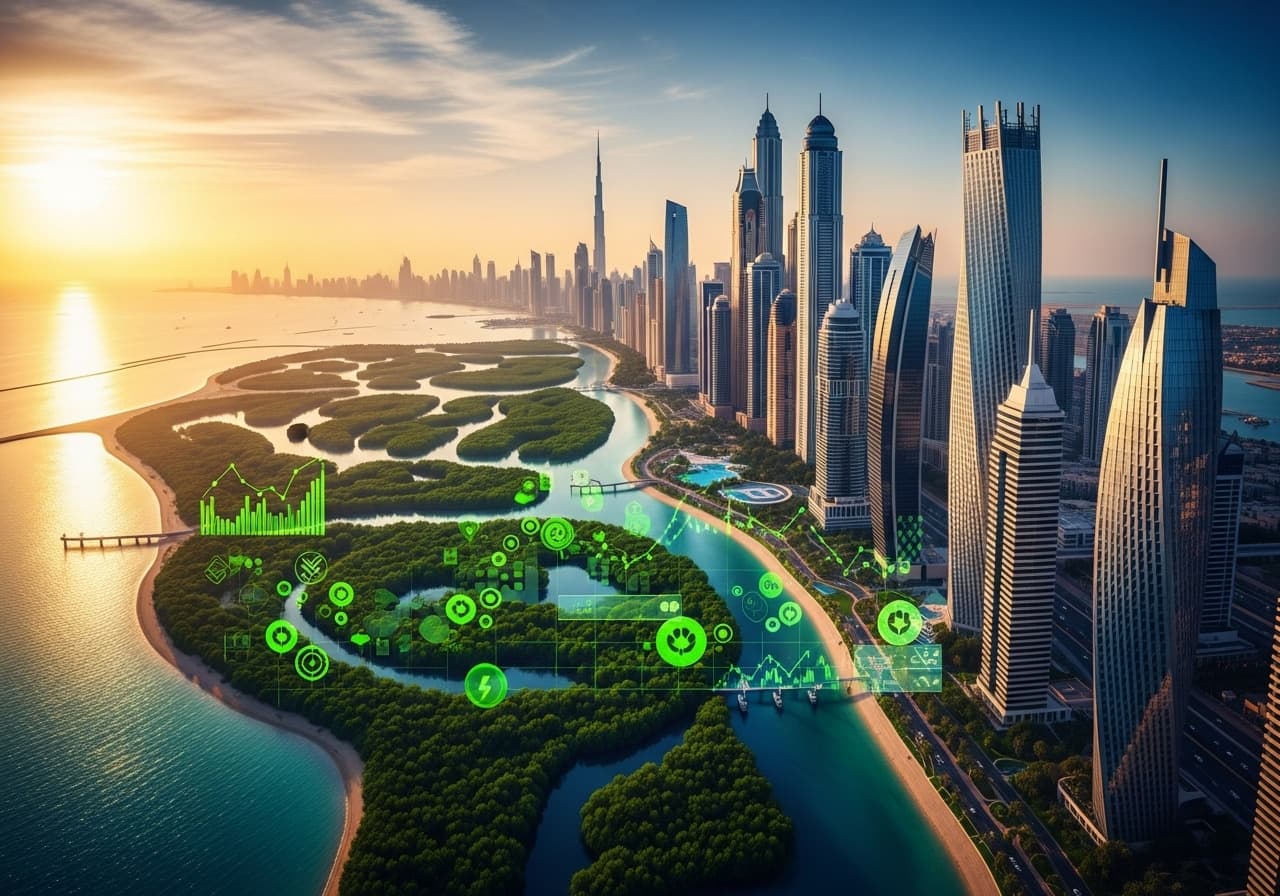
When you think about Dubai's future, you probably picture high-tech gadgets and record-breaking skyscrapers. But the most powerful force shaping the region's economy in 2025 is actually much greener, older, and proving to be seriously profitable.
In a strategic pivot that has caught the attention of global finance, Dubai is making huge plans to expand its green spaces. This includes planting massive mangrove forests along the coast to stop erosion and bring back wildlife. This is not a simple environmental project. It's a calculated economic move, and the banks are lining up to fund it.
Financial institutions across the Gulf are waking up to a new reality. They are staring down accelerating climate risks, from brutal heatwaves to floods that threaten trillions in property. Their response is to flip the script. They no longer see nature as something to protect, but as a hard financial asset that builds resilience and delivers solid returns.
This entire shift revolves around something called Nature-based Solutions (NbS). It's a concept that has jumped from conservation meetings straight onto the trading floor.
How Nature Pays the Bills
For decades, protecting the environment was seen as a cost. Now, it’s a source of revenue. Projects like mangrove forests, water recycling systems, and district cooling create value in three clear ways:
- Direct Cashflow: These projects generate real income, either from selling carbon credits or by attracting more eco-tourism.
- Long-Term Savings: A healthy mangrove forest is a natural sea wall. It can prevent millions in storm damage and lead to lower insurance costs. Recycling water cuts down on massive utility bills.
- Increased Property Value: Buildings and companies with strong green credentials (often called ESG) attract better investors and tenants. This directly boosts their market value.
This change in thinking is opening up entirely new markets. The Head of Sustainable Finance Initiatives at Gulf Bank & Trust puts it plainly.
"Integrating nature-based solutions into our financing portfolio isn't just about mitigating risk; it's about unlocking new asset classes and driving long-term value, especially as major real estate developments in places like Dubai prioritize sustainability."
What This Looks Like for Developers
So how does this work in a dense city like Dubai? For real estate investors and developers, the solutions are both practical and financially smart.
Here’s what is working right now:
- Green Roofs and Walls: New towers are being built with “living roofs” and vertical gardens. These look great, but their real job is to act as natural insulation, slashing air conditioning costs which are a huge expense in the Gulf.
- Smart Urban Drainage: Instead of concrete that causes flooding, new developments use permeable pavements that absorb rainwater. This water is then filtered and reused for landscaping, turning a climate hazard into a free resource.
- Smarter Cooling: Developers can design entire neighborhoods around central, super-efficient cooling systems. When combined with natural shade from green spaces, this lowers energy use and utility bills for everyone, making the properties far more attractive.
The Billions Behind the Green Shift
To make this all happen, you need a lot of capital. Experts estimate that closing the region's climate resilience gap will require hundreds of billions of dollars by 2030. This is where the banks come in.
They are using a range of smart financial tools, like green bonds and sustainability-linked loans, to fund these projects. They also use blended finance, which mixes public and private money to make newer, riskier projects more attractive. Financial institutions are no longer just lenders; they are architects of a new, sustainable economy.
This is more than just a defense against climate change. It is a visionary economic strategy, creating a future where financial growth and environmental health go hand in hand. For smart investors, the time to get involved is now.